Our Trip to Poland and Ukraine
We traveled to Poland and Ukraine with a simple intention: to sit with people who are carrying more than anyone should have to carry, to listen deeply, and to offer what we know about healing in community.
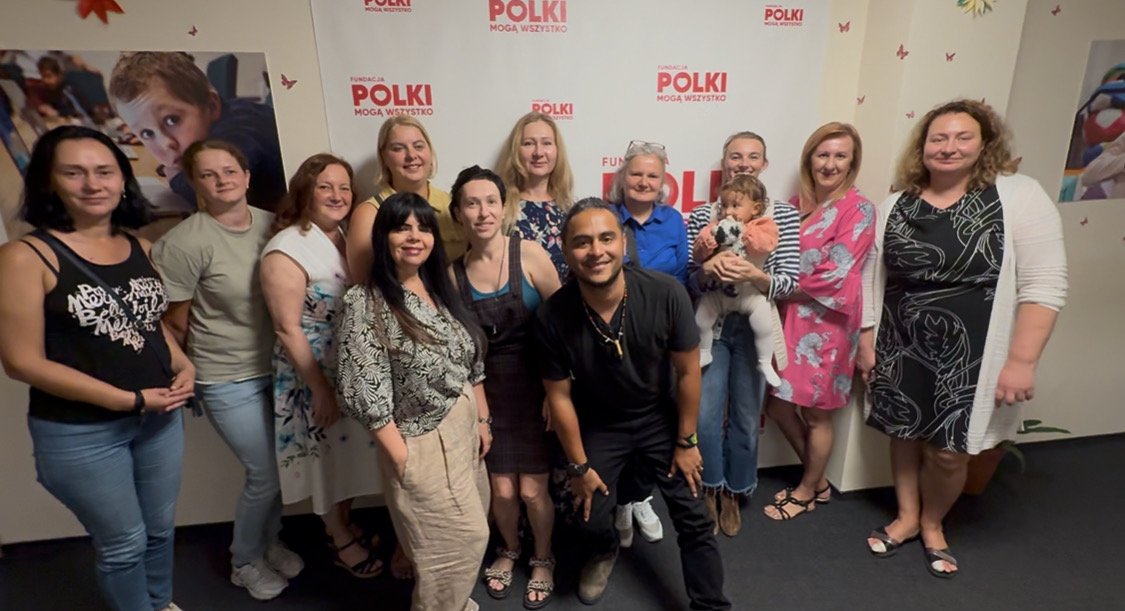
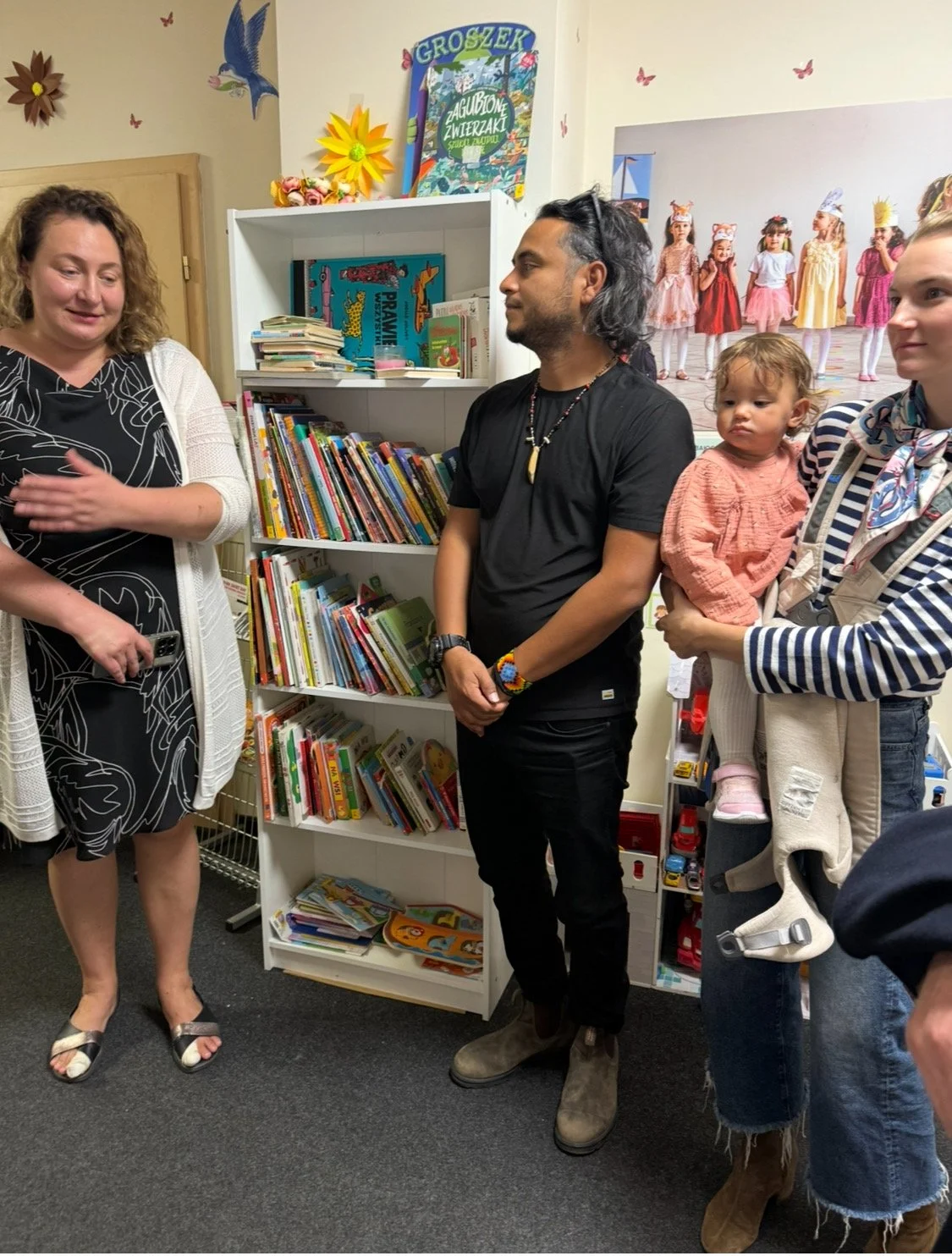
Samantha and I arrived in Warsaw with our daughter, Sasha, for a week of meetings and to introduce Raíces Ancestrales practices. Two of our trusted partners then continued into Ukraine to visit local organizations, observe programs, and help us see where our work can be of real use.
We did not go with a master plan. We went with open hands, open ears, and the practices that have grown out of our own roots.
Why We Went
Raíces Ancestrales exists because we have seen again and again that simple, body-based practices can soften the impact of deep stress and trauma when they are rooted in culture and community.
Poland and Ukraine are carrying a shared weight right now. Families are still being displaced. Veterans, volunteers, and civil servants wake up each day and keep systems running while the war continues in the background—and sometimes in the foreground.
Our question was: where, in all of that, can a small organization like ours add something that is genuinely supportive and not one more demand?
Warsaw: Calm in the Middle of Constant Work
In Warsaw we met with people who have been holding the line since the first days of the full-scale invasion: humanitarian leaders, local officials, women’s organizations, educators, and mental-health practitioners.
The policy environment is shifting. Funding lines open and close. Still, local groups continue to move with calm competence. Roughly seventy percent of Ukrainians in Poland are working. Community centers and NGOs are offering language classes, childcare, and psychosocial support with budgets that are far too small for the work they are doing.
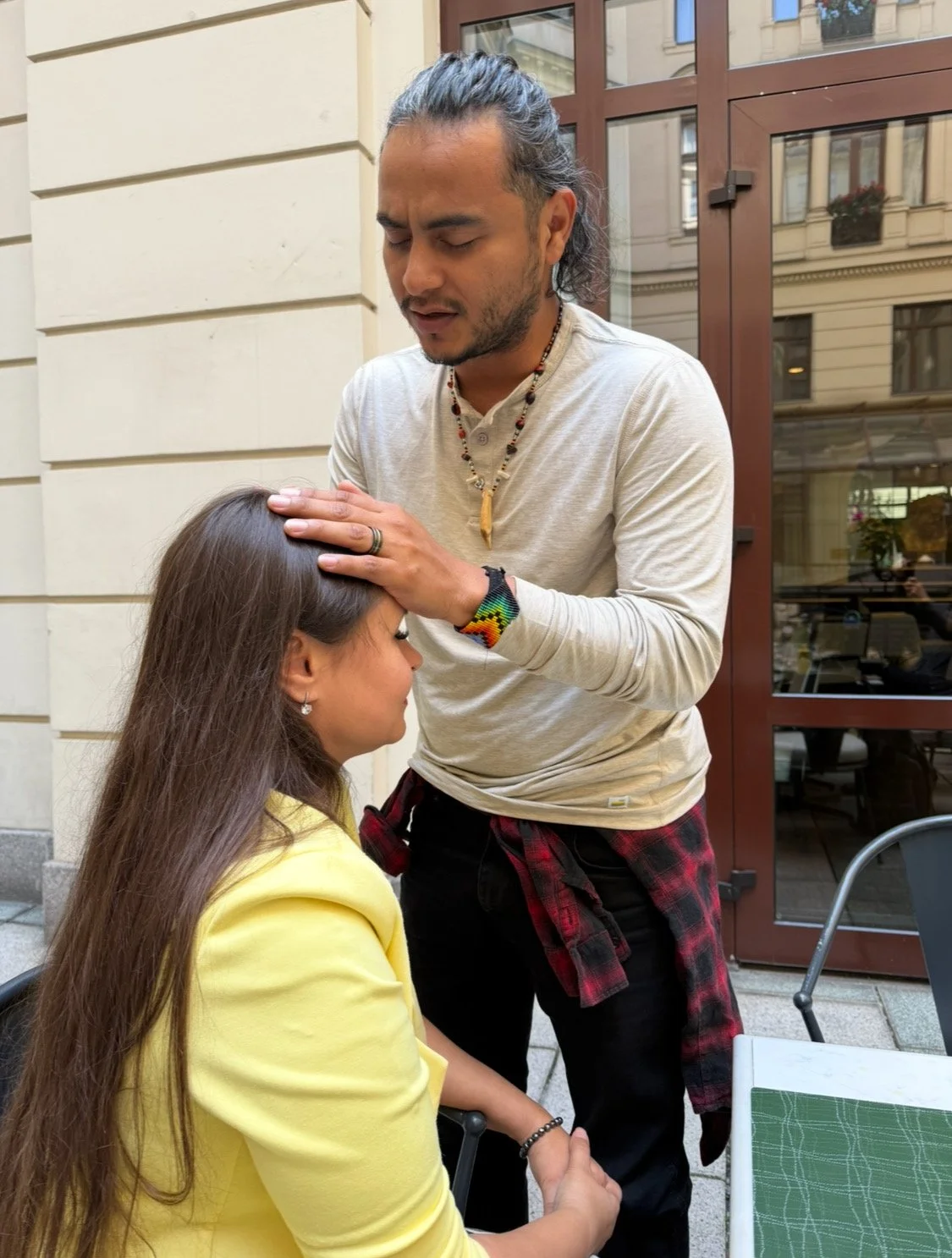
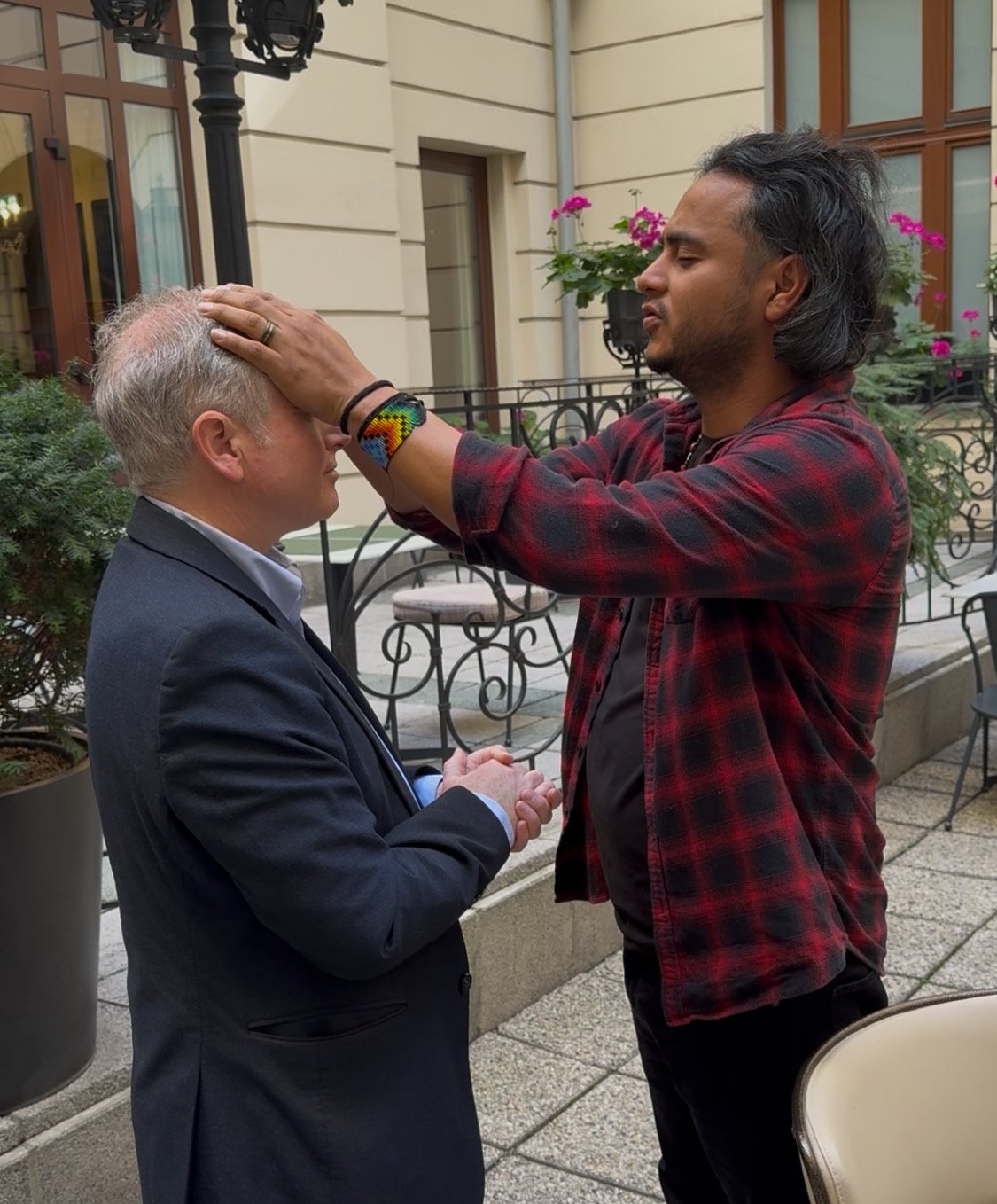
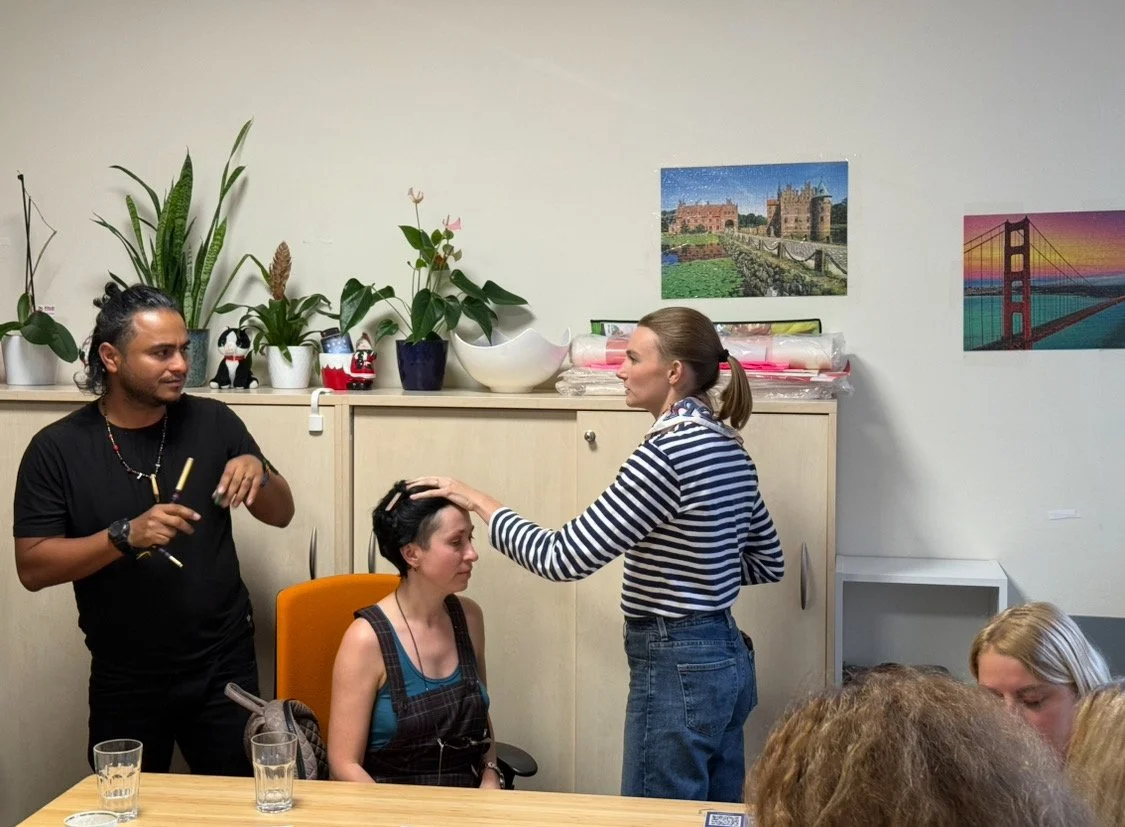
In those rooms, Samantha and I shared the Raíces approach:
Gentle practices that lower anxiety without forcing anyone to “open up” before they are ready.
Breath, attention, and simple ritual that ask nothing from people except presence.
Ways to close a session so that everyone can re-enter their day grounded, not raw.
We ended several meetings with a blessing. People received it with a kind of quiet relief. Sasha, sitting on our laps or playing nearby, changed the energy in every space we entered. Her presence reminded people what all of this work is really about: children, family, the possibility of a future that feels safe.
Again and again we heard the same feedback: this feels respectful of our culture, small enough to repeat, and safe enough to try with our own communities.
Lviv: Culture as a Survival Tool
In Lviv, our partners’ reports were clear: culture is not decoration here, it is survival.
Air-raid warnings still sound. Trains run. People go to work. Cafés open. Life continues by choice, not by denial. University program leads and volunteer networks told us about their focus on post-traumatic stress, moral injury, and survivor guilt.
We heard about:
Simple stop-and-start techniques to help people come down from acute stress.
Peer-support circles where veterans and volunteers learn to listen to each other.
Quiet rooms in universities and community centers where people can sit, breathe, and talk when they are ready.
Trusted local groups are carrying much of this work while national systems try to catch up. Veterans are slowly becoming more willing to talk with one another, not only with professionals. That shift matters. Peer networks are often the first doorway to deeper care.
Our role, as we see it, is to bring practices that can slide into what already exists: short, repeatable sessions that local facilitators can learn and adapt, without replacing clinical work or traditional structures.
Odesa: Damage and Discipline Side by Side
In Odesa, the contrast between visible damage and everyday discipline is sharp.
Landmarks are scarred. Ports and neighborhoods bear the marks of strikes. At the same time, the civic heartbeat is strong. People are tired, but they keep showing up.
At a mental-health clinic, a psychiatrist described something that many others echoed: trauma here is not a single event in the past. It is continuous. Reintegration is not a moment when “the war ends.” It is a long, uneven process of coming back into family life, work, and community while the threat remains in the background.
The clinic staff use:
Individual and group therapy
Medical support when necessary
Family participation, so that healing does not depend on one person carrying everything alone
They are not chasing dramatic breakthroughs. They are working to keep people upright and connected. It is patient work. It is necessary work.
For Raíces, this confirmed our sense that any support we offer has to respect the cadence of that work. No big promises. Small tools that can be woven into what clinicians and community workers are already doing.
Kyiv: Seeing What “Whole-Person Care” Actually Looks Like
Kyiv carries the story of the country in its streets. We walked on Maidan, stepped into churches, and moved through neighborhoods where repairs and damage sit side by side.
Two visits will guide our collaboration going forward.
Superhumans Center
At Superhumans, we saw a model of rehabilitation that treats dignity as a standard, not a luxury. Everyone is held to one clinical bar, not divided into “more” or “less” deserving. Care is designed for men, women, and children, not just retrofitted for whoever shows up. Pediatric care is licensed and built to keep pace with growth. Skills training leads to real jobs. Accessibility is built into the architecture and then checked, not assumed.
Our practices can sit alongside this kind of work as a steady, low-friction tool: short grounding exercises before fittings, gentle closing rituals after difficult sessions, family-level practices that help everyone in the household live with new realities.
Save Ukraine Hope and Healing Center
At the Save Ukraine Hope and Healing Center, we saw how child rescue, early intervention, and family support can be held in one place.
Since 2022, they have carried out more than 1,500 rescue missions. They use modular homes to stabilize families. Their programs include:
Three-month rehabilitation cycles, with extensions for the highest-risk cases
Catch-up education in core subjects
Early childhood teams for the youngest children
A child-friendly space for survivors of sexual abuse, with an integrated shelter, now under construction
A father who lost both legs spoke about how the center kept his family from breaking apart. All of this runs on private and international donors. None of it is guaranteed.
Raíces can support this kind of work by focusing on the people who are always “on”: caregivers, staff, volunteers, and parents. They need ways to refill themselves that do not require extra appointments or special equipment.
How Raíces Ancestrales Will Walk Alongside Ukraine and Poland
From these days on the ground, a few clear next steps emerged for Raíces Ancestrales.
We will:
Return to Warsaw to train facilitators inside partner organizations so that Raíces practices can be carried by local teams, in local languages, with local wisdom.
Pilot short, trauma-aware sessions alongside clinical care in Kyiv and Lviv—simple, repeatable, measurable. We will track outcomes like sleep quality, anxiety symptoms, and session attendance.
Focus on families and caregivers, not only on veterans and volunteers. When a home or classroom is more regulated, everyone inside has a better chance to heal.
Help partners name and measure small wins: deeper rest, fewer panic episodes, more consistent participation. Change will be slow and layered. We want to make it visible enough that funders understand what their support is making possible.
What We Carried Home
Samantha and I went to offer something small and steady. Sasha reminded us, every day, why it matters. Her laughter in hallways, her naps on our shoulders, her curiosity at each new face—all of it brought a softness into spaces that carry heavy stories.
What stayed with me most was the discipline of the people we met. Not just soldiers or doctors, but teachers, case workers, city staff, volunteers, parents. They are doing the ordinary, repetitive work that keeps a country standing: opening doors in the morning, making lists, returning calls, holding space for tears, washing dishes, showing up again.
Our responsibility at Raíces Ancestrales is to bring practices that strengthen that quiet daily courage, not to complicate it.
If you feel called to help, support the groups that are already doing the work:
Fund what is practical and grounded.
Support programs that measure impact, even in small ways.
Stand with the people who open their doors each day and do not look away.
Raíces Ancestrales will be back soon: in Warsaw, in Ukraine, and in other places where communities are carrying more than anyone should have to carry. Until then, we remain in relationship with our partners, listening, learning, and preparing the next steps.