Strength in Practice: Raíces in Odesa
In Odesa, Raíces met people who carry the war in their bodies but hold their balance in quiet ways. The soldiers, cadets, and doctors we spoke with work through exhaustion and grief yet continue to serve. They are building systems that heal while the fighting goes on.
At the 39th Brigade Recruitment and Care Center, the staff greeted us without ceremony. Their program is modern and clear. Recruits are screened for skills and matched to the work they can do best. About one hundred join each month. Wounded soldiers are treated and stay in contact with their families. Children’s camps keep the youngest connected to a parent’s service. The system keeps people tied together. It is simple and human.
The men running the program spoke of the front. Drones are everywhere. The air is full of noise and machines. They said Western training sometimes misses what the field now demands. The pace of the war forces new ways of thinking. They want to build a corps of noncommissioned leaders who can teach calm and precision. They spoke about the value of breath, awareness, and stillness. We understood that language.
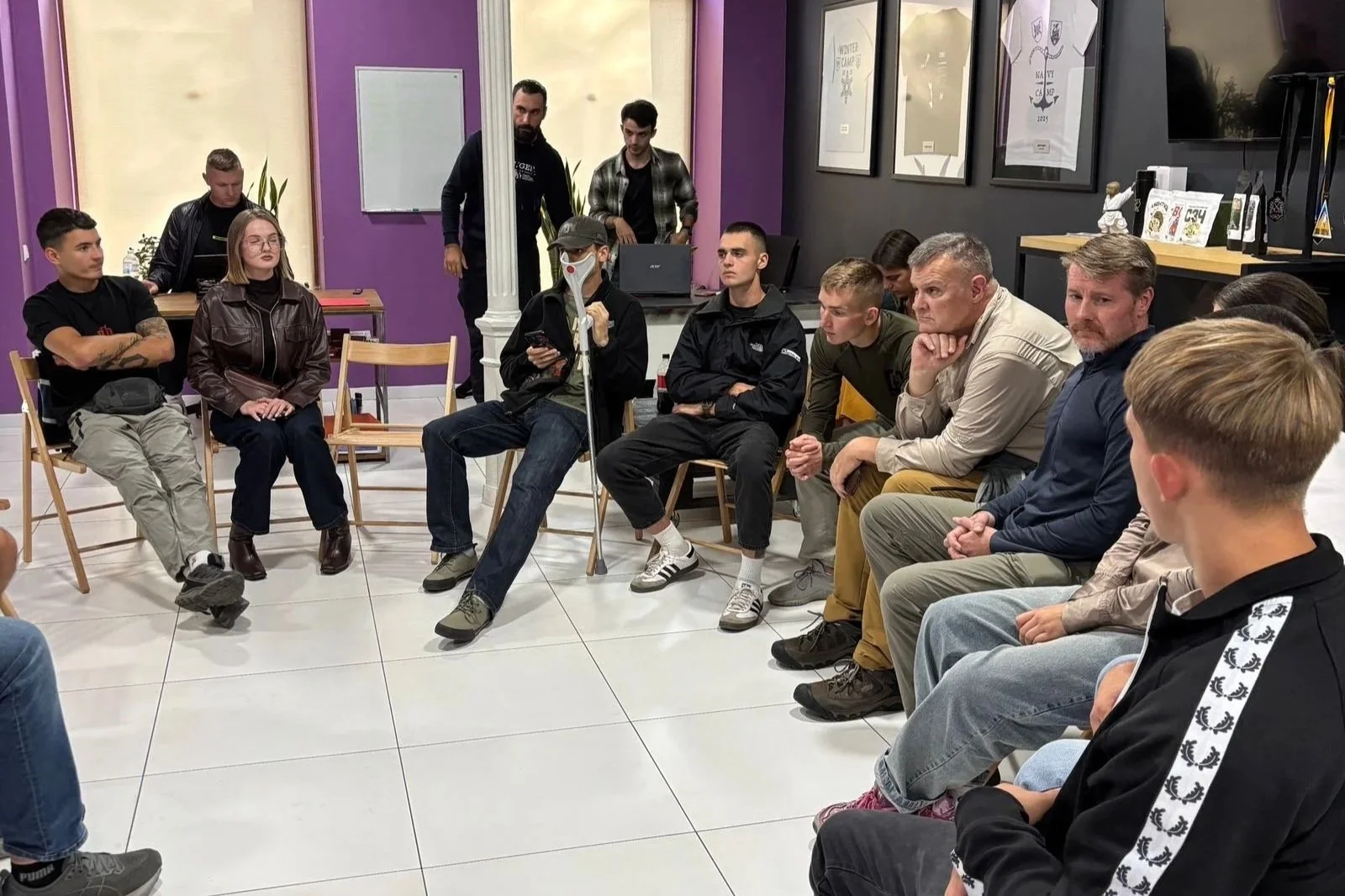
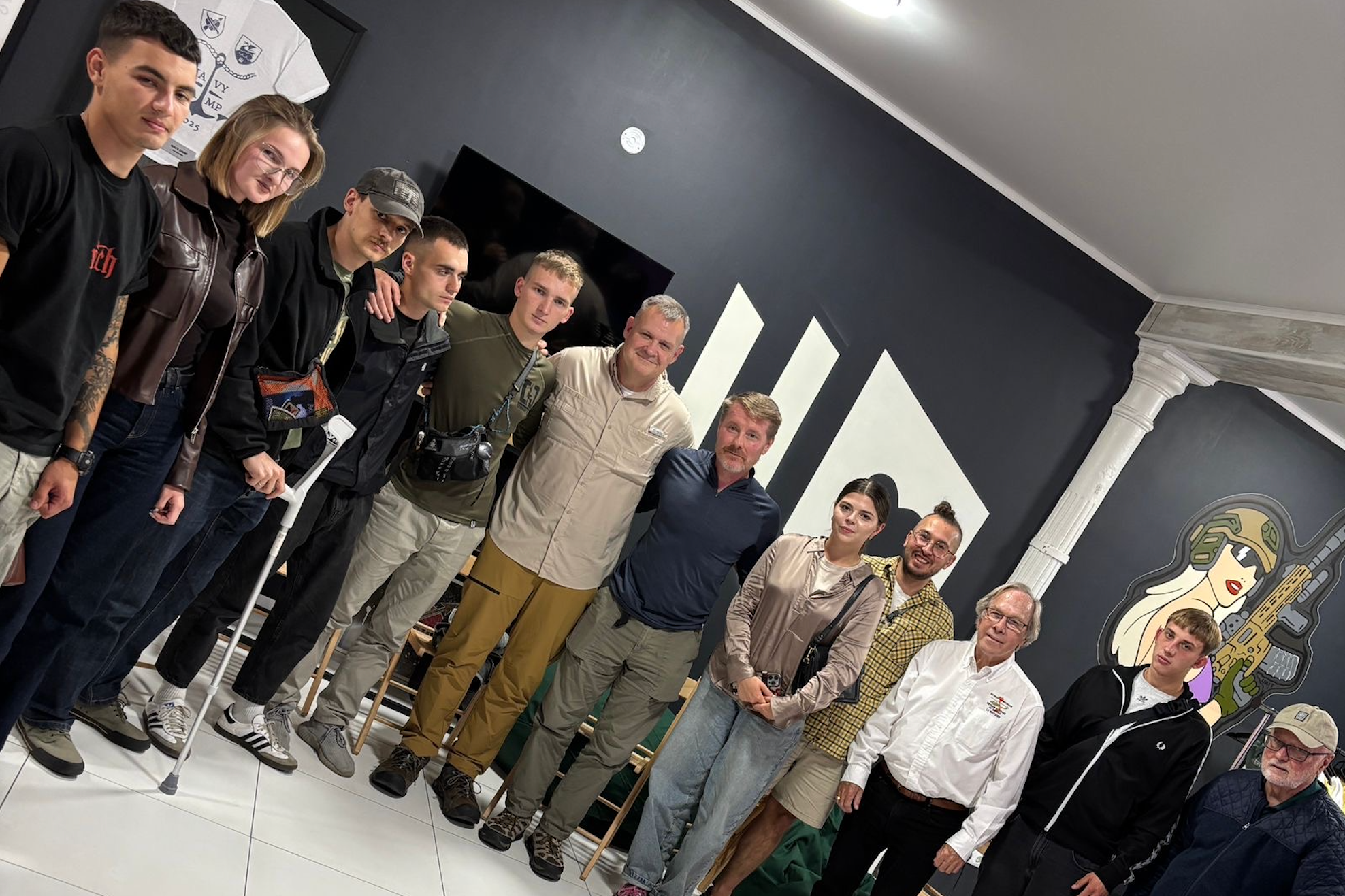
Meeting with Ukrainian veterans at the Naval Academy, in Odesa, Ukraine
We saw that healing is faster when people keep their identity. A wounded soldier who keeps his uniform keeps his story. It tells him who he is and what he belongs to. Families find comfort in that sign of continuity. The home steadies the fighter and the fighter steadies the home.
At the Naval Academy, cadets and instructors gathered in a plain classroom. They spoke about the need for mental readiness. We talked about writing as a tool. A few lines at the end of each day help a soldier put order to his thoughts and lift them from his mind. The act of writing is a kind of breathing on paper.
The academy tracks the physical strength of its cadets. When training drops off, the instructors know something is wrong. Fatigue and poor sleep are the first warnings. A quiet word from a peer can pull someone back before they fall too far. The instructors want to train that kind of awareness. They know that leadership begins in paying attention.
Many of the teachers have seen the same wounds repeat. Head injuries are often mistaken for emotional shock. The two travel together and confuse each other. The academy wants to separate them and treat them clearly. This kind of clarity saves time, money, and trust.
We spoke about alumni networks. Graduates want to stay connected and help those still in training. The academy will begin small groups that meet regularly. The goal is not ceremony but support. They will share experience, jobs, and steady contact. The cadets liked the idea. They said they already have the will, they only needed a structure.
The lesson we brought home is that resilience is not a single act. It grows where people work together and stay grounded in who they are. Shared resilience is stronger than individual endurance. The Care Center and the Naval Academy showed us that the same roots that hold a person also hold a country. Breath by breath, they are building a foundation that will outlast the war.