Methi ladoo recipe & Benefits
Introduction
In many traditional Indian and Ayurvedic households, special “postnatal laddus” (sweet balls) are prepared for the mother during her recovery period (often the 40-day confinement). Among these, methi ladoo (made primarily with fenugreek seeds, ghee, jaggery or unrefined sweeteners, and other herbs/nuts) holds an honored place. These are not just treats — they are part of a carefully designed nourishment strategy.
“Methi” is the Hindi / Sanskrit-derived name for fenugreek (Trigonella foenum-graecum), and Ayurveda values its warming, stimulating, and nourishing qualities. The rationale is that after childbirth, the mother is in a state of depletion (especially of tissues, fluids, energy) and increased vāta (wind / movement) tendency. The postpartum period (ṣaṭ‐akrama or “seven stages”) needs snigdhata, ushna, balya, rasāyana qualities (oily, warm, strengthening, rejuvenative) to help rebuild and purify.
In that context, methi ladoo is seen as a multitasking formula: it helps promote lactation, supports uterine involution (shrinking back), purifies or clears residual wastes (ama / toxins), and replenishes energy and tissues. Below is a deeper look.
Benefits From an ayurvedic lens
In Ayurveda, benefits are understood via doshas (vāta, pitta, kapha), dhātus (tissues), agni (digestive/metabolic fire), ama (undigested toxins), and srotas (channels). Here are how methi ladoo is said to operate in these terms:
Galactagogue / Milk-supporting action: Fenugreek seeds contain saponins, diosgenin, and phytoestrogenic compounds, which are believed to stimulate mammary (milk) ducts and promote milk flow. Modern herbal/traditional sources often cite fenugreek as a classic galactagogue.
Agni support and elimination of ama: The warming and pungent qualities of fenugreek (and other herbs that might accompany the ladoo, such as ginger, ajwain, etc.) help kindle the digestive fire (agni) so that residual waste (ama) can be processed and excreted, rather than stagnating. Some postpartum recipes indeed begin with light, easy‐to-digest meals and gradually introduce strengthening foods.
Tissue nourishment and rebuilding (dhātu support): The fats (ghee), proteins (from nuts/seeds), and micronutrients in the ladoo contribute to rebuilding depleted tissues (rasa, rakta, mamsa, etc.). Ayurveda holds that after childbirth, the tissues are “used” and require replenishment.
Uterine involution and tonification: Ayurvedic tradition often uses herbs and formulations that “contract” or tone the uterus, helping it return to its pre-pregnancy size. Some postpartum herbal laddus (in which methi is a core ingredient) are described as “uterine tonics” or “uterine contractors.”
Balancing hormones and regulating cycles: Because fenugreek has phytoestrogenic compounds, it is sometimes thought to help normalize hormonal fluctuations, especially in the postpartum transition.
Support for digestion, metabolism, elimination: Fenugreek has fiber, mild laxative effects, and anti-inflammatory actions, helping relieve postpartum constipation or sluggish digestion.
Immune / antioxidant / anti-inflammatory contributions: The seeds also carry antioxidant phytochemicals which can help reduce oxidative stress and inflammation, supporting general recovery.
Thus, from an Ayurvedic lens, methi ladoo is not just a “sweet” but a compounded medicinal–nutritive preparation targeting multiple postnatal needs.
Conclusion
Methi ladoo epitomizes a beautifully integrative Ayurvedic postpartum remedy: it is simultaneously nutritive, tonic, galactagogue, digestive stimulant, and refining. It addresses many of the core needs of a new mother — restoring strength, supporting milk flow, aiding uterine recovery, and smoothing the path of digestion.
However, its benefits are best realized when used judiciously and in alignment with the mother’s unique constitution, digestive capacity, and health context. If you're considering recommending or trying methi ladoo for postpartum recovery, working with an Ayurvedic practitioner (or health professional familiar with herbs) is wise, particularly if there are underlying conditions or sensitivities.
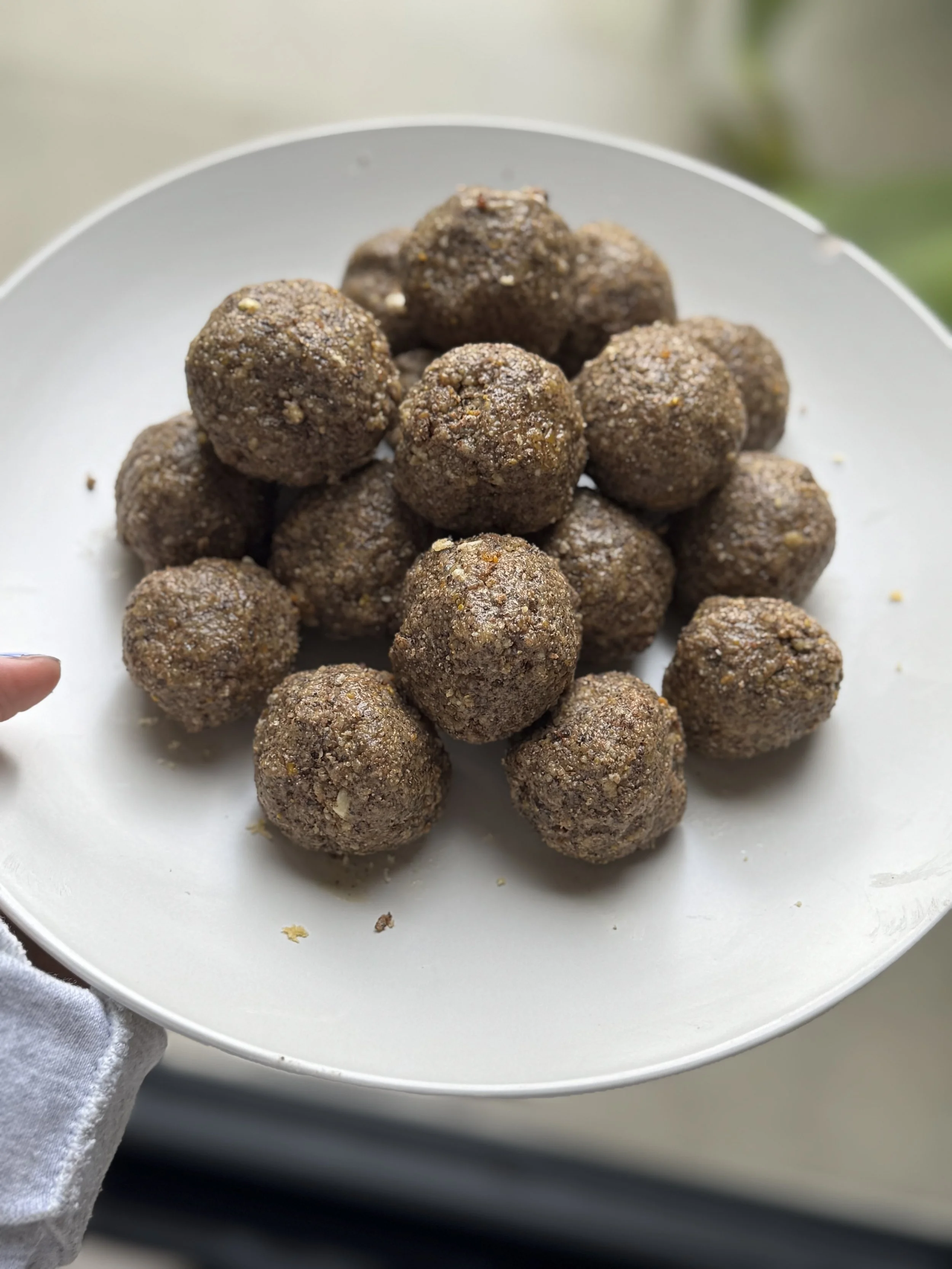
RECIPE
INGREDIENTS:
Makes ~20-25 balls
Fenugreek powder 75gms
Ghee 100gms
White poppy seeds 50gms
Edible gum (gond katira) 25gms
Wheat flour (organic) 150gms
Jaggery/panela or powdered sugar 400 gms
Almonds 25gms
Pistachio 25 gms (I used pumpkin seeds)
Cashews 25gms
DIRECTIONS:
Soak fenugreek powder in ghee for 8 days, stirring ghee at least once a day
Soak all nuts & dehydrate (or buy sprouted nuts), then grind poppy seeds, almonds, cashew, and pistachio together coarsely
Carefully crush larger pieces of edible gum in a mortar to make them smaller. Heat the ghee in a pan and fry the edible gum pieces a few at a time until they expand. When cool, crush them with your fingers.
Roast the whole wheat flour in the remaining ghee until it is golden brown in color.
In a large plate or bowl, mix the hot roasted flour + crushed fried edible gum. Add the ghee soaked fenugreek powder + jaggery and roll them into balls.
Eat 1-2 per day as needed
*Note: if you feel the balls are too dry and crumble, add extra ghee until they form together. Once they are placed in the fridge, they stick together more.
Credits for recipe to Vaidya Anita Misra :)
